01Engineering approach

I build reliable systemsfor complex productchallenges.

Full-stack delivery. Strong backend foundations. AI integration.

FULLSTACK / BACKENDTbilisi, Georgia
02Impact
5+

years of commercial experience

Building products
≈60%

fewer incidents requiring manual intervention

FinTech · NDA
30–35%

reduction in page load time

RentyCars
≈25%

reduction in average API latency

RentyCars
03Selected work
Products. Decisions. Personal contribution.

01 / Commercial

RentyCars

Less waiting. More moving.

Developed a car rental platform, from user journeys to APIs and real-time availability updates.

My role

Full-stack development

Visit website
Car beside a coastal landscape — visual material from RentyCars
Visual material from the RentyCars website
30–35%reduction in page load time
≈25%reduction in average API latency

02 / Commercial

Umnico

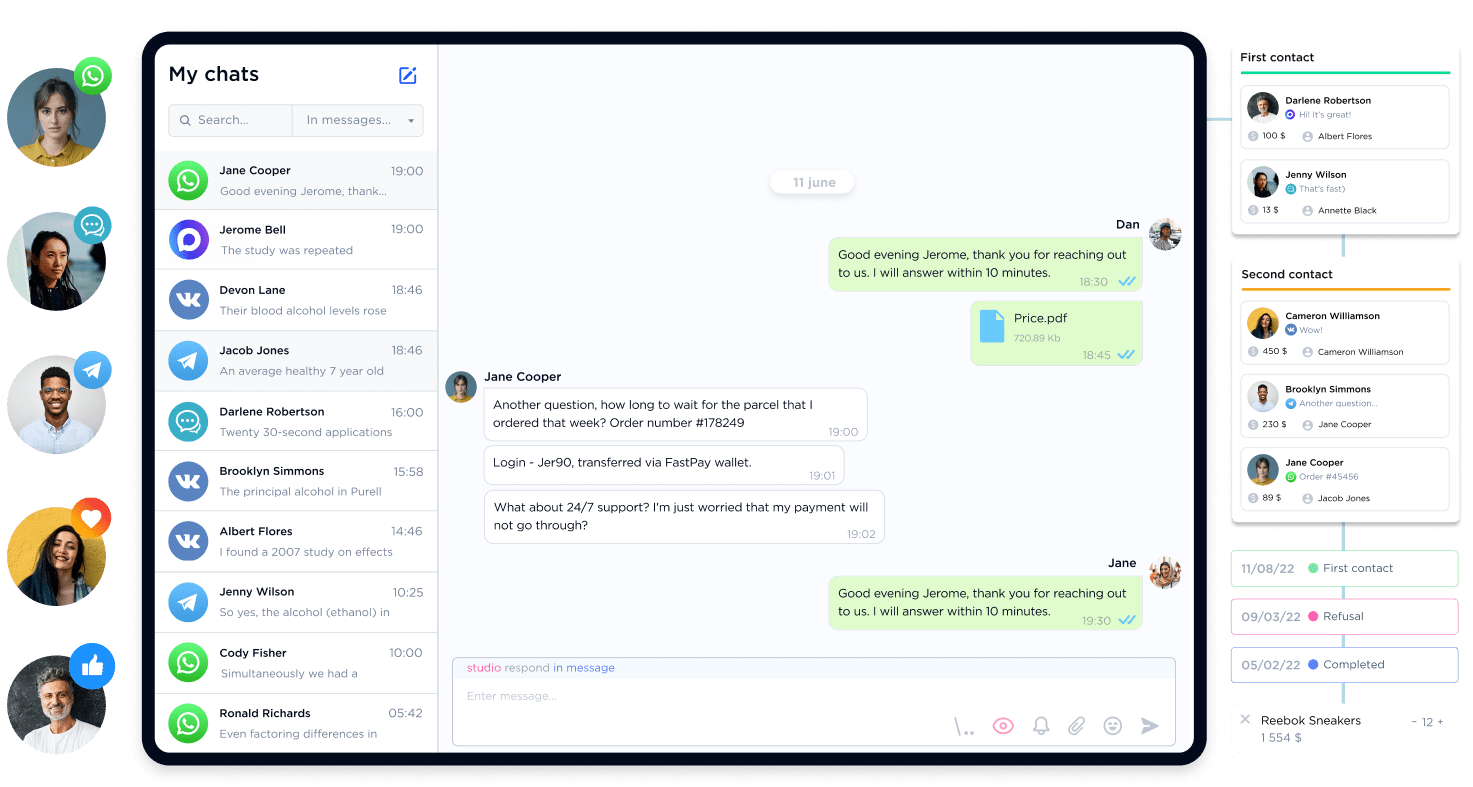
Omnichannel support without losing context.

Umnico interface showing conversations from multiple communication channels
Umnico omnichannel platform interface

Built high-load, real-time interfaces for a unified workspace: WebSocket event processing, message and notification synchronization, state management and reusable UI components.

React · TypeScript · WebSocket · State management

Visit website

03 / Commercial

Affinage

Financial interfaces built to evolve.

Developed FinTech product modules and contributed to OAuth and payment integrations. Migrated part of the application to the Composition API and extracted shared business logic into reusable composables.

My role

Vue 3 · Nuxt · TypeScript · Pinia

Lighthouse 90+ · build time reduced by approximately 35%.

Visit website
Public Affinage company websitePUBLIC WEBSITE / NDA WORK
Public Affinage website. Work from this period remains confidential.
Painting exhibition in the UHAB art space
Exhibition space. Visual material from the UHAB website

04 / Project

UHAB

A digital home for art.

Built the entire website for the UHAB art space.

My role

Full website development

Visit website

05 / Project

CSS Layout Lab

An interactive laboratory for CSS layout.

Designed and built an educational tool from scratch that teaches Flexbox through controlled experiments and immediate visual feedback. Mentored a junior developer throughout the work.

My role

Product concept · UX · Development · Mentoring

Complex layout rules become visible and testable without repeatedly rewriting CSS.

Explore project
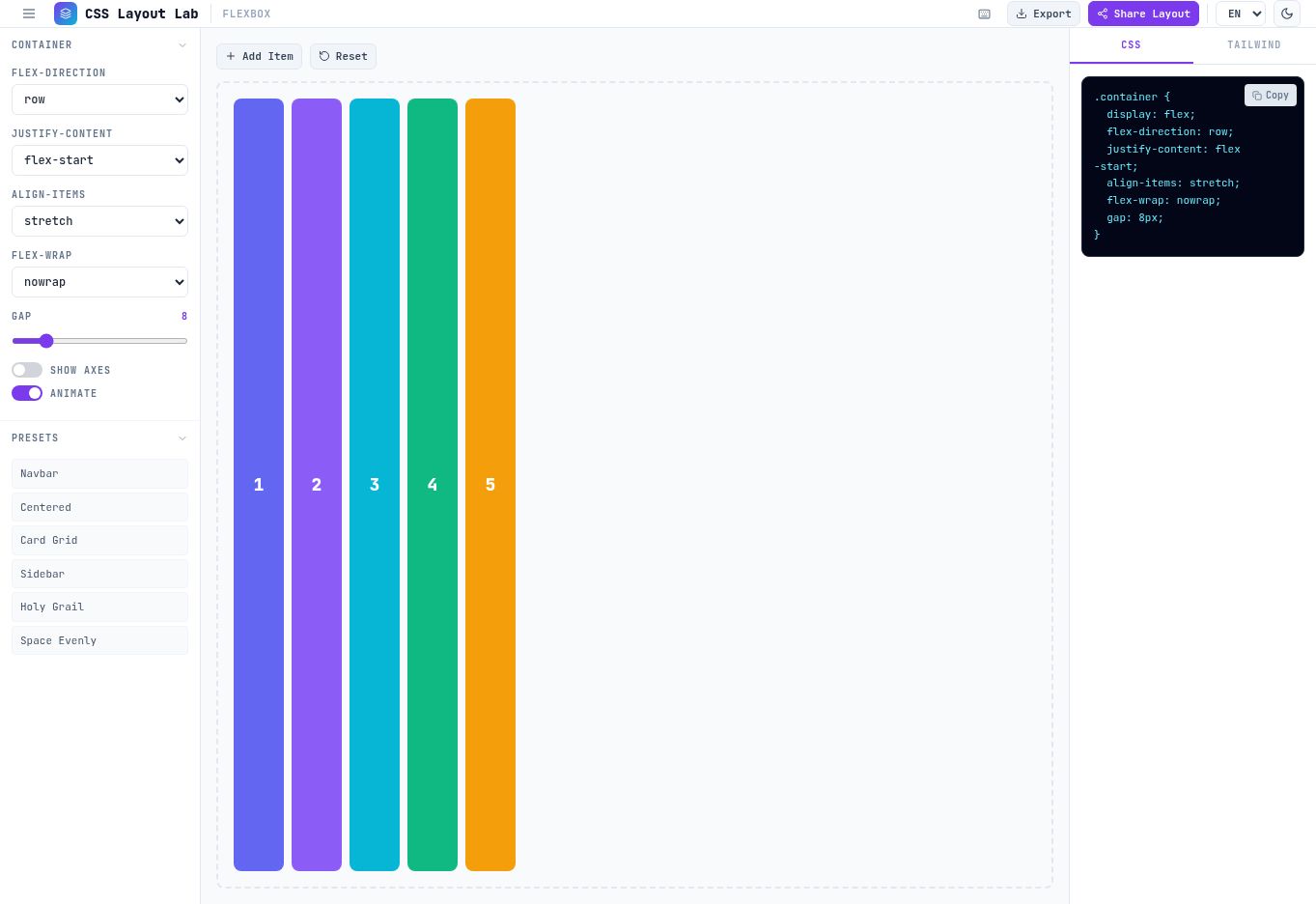
CSS Layout Lab interface with Flexbox controls and a visual result
The working CSS Layout Lab interface
04Confidential projects

Systems behindthe scenes.

FinTech · Crypto · Cards

Evolved the backend and operational layer of a FinTech platform: identified systemic causes of incidents, improved transaction and integration reliability, strengthened security and automated support.

Project A / NDA

≈60%

fewer incidents requiring manual intervention

Removed the causes of stuck transactions, status desynchronization and inconsistent states.

35–40%

faster database and API responses

Optimized SQL queries, backend modules and critical processing paths.

70%

of requests handled by AI + RAG

Integrated an assistant with a knowledge layer to automate first-line support.

SECURITY

critical risks closed

Strengthened validation and protected vulnerable parts of the application.

PROVIDERS

integrations renewed

Updated and replaced integrations with payment and external service providers.

Project B / NDA

Conducted a security audit and eliminated the identified risks.

Identified and fixed idempotency defects, potential data-leak scenarios and other vulnerabilities that could compromise product security.

  1. 01Diagnose root causesIncident map and problematic states
  2. 02Transaction reliabilityIdempotency and duplicate / out-of-order protection
  3. 03Integration resilienceRetries, fallbacks and provider-layer renewal
  4. 04Security & observabilityRisk controls and critical-process monitoring
  5. 05AI support automationRAG layer for common support requests

05How I work

From contextto measurable outcomes.

First I find where the system loses money, time or reliability.Then I turn the problem into a verifiable engineering change.

Working principles
01

Ownership

Carry work across frontend, backend, data and integrations.

02

Reliability

Design happy paths and failure paths together.

03

Clarity

Leave the system understandable for the next engineer.

04

AI + verification

Use AI for speed while preserving engineering review.

  1. 01
    Context and outcome

    Define the product outcome, constraints and success criteria.

  2. 02
    Diagnosis

    Use data, logs, metrics and reproducible scenarios.

  3. 03
    System design

    Define boundaries, contracts, states and failure modes.

  4. 04
    Risks and edge cases

    Account for race conditions, idempotency and security early.

  5. 05
    Incremental delivery

    Ship in safe stages with migrations and compatibility in mind.

  6. 06
    Production verification

    Add tests, observability and a clear rollback path.

  7. 07
    Measured effect

    Validate the result through latency, incidents and user experience.

06Career

From first interfaces to system-level ownership.

Each stage expanded not only my stack, but the scope of my thinking: from the correctness of one screen to the security, performance and business impact of the whole system.

  1. 012018–2022

    Foundation

    Engineering education

    Built a foundation in algorithmic thinking, data structures, databases and software systems. Learned to understand the problem first and choose the tool second.

    • Algorithms
    • OOP
    • Databases
    • Git

    FocusCorrectness and engineering foundations

  2. 022021–2022

    First production work

    Interfaces and Telegram bots

    Started building user journeys independently, from interface state to API calls and bot logic. My code became part of real workflows used by real people.

    • JavaScript / TypeScript
    • Vue / React
    • REST APIs
    • Telegram Bot API

    FocusUsers and complete workflows

  3. 032023–2025

    The whole product

    CRM and full-stack applications

    Worked on real-time CRM and car-rental services. Connected frontend, backend, data and external integrations, taking responsibility for end-to-end product behavior rather than a single module.

    • Vue / React
    • Node.js
    • WebSocket
    • PostgreSQL

    FocusSystem cohesion and product speed

  4. 042025–2026

    High cost of failure

    FinTech engineering

    Moved into systems where failures affect money and trust. Optimized critical paths and strengthened security, observability, transaction reliability and payment integrations.

    • NestJS
    • PostgreSQL / Redis
    • Docker
    • Payments / Monitoring

    FocusRisk, performance and business impact

  5. 052026 →

    Current focus

    AI-enabled engineering

    Integrate LLMs, RAG and agents into production workflows. Treat AI as another system layer, with context, tools, quality metrics, constraints and mandatory verification.

    • LLM APIs
    • RAG
    • Agents / MCP
    • Harnesses / Evals

    FocusArchitecture, automation and quality control

The path reflects growing engineering responsibility; some stages and technologies developed in parallel.

07Toolbox

The stack, organized by system layer.

Languages & runtime

  • TypeScript / JavaScript
  • Node.js
  • Python
  • Go

Backend

  • NestJS
  • TypeORM / Prisma
  • REST APIs
  • Webhooks
  • OAuth

Frontend

  • Vue / Nuxt
  • React / Next.js
  • Pinia / Redux / MobX
  • SSR
  • Real-time UI

Data

  • PostgreSQL
  • Redis
  • MongoDB
  • MySQL
  • Firebase / Supabase

Integrations & APIs

  • Payment providers
  • External APIs
  • WebSocket
  • Swagger / OpenAPI
  • Postman

Infrastructure

  • Docker / Docker Compose
  • Swarm / Portainer
  • Kubernetes
  • CI/CD
  • Vercel

Quality & observability

  • Jest / Vitest
  • Unit / Integration tests
  • Sentry / Grafana
  • Monitoring
  • Logging
  • GitHub Actions
  • GitLab CI/CD
Current focus

AI engineering

  • LLM APIs
  • RAG
  • Agents
  • MCP
  • Tool Calling
  • Agent harnesses / Evals
  • n8n

I design the AI layer as part of a production system, with context, tools, quality evaluation and controlled outcomes.

08Education

Engineering foundations.An expanding toolkit.

Formal software engineering education gave me a foundation in algorithmic thinking, software systems and the habit of tracing problems to their causes rather than stopping at the first working solution.

AI does not replace that foundation. It extends it — accelerating research, code analysis and routine automation while architectural responsibility and verification remain with the engineer.

Software Engineer, Web Developer

RCCI · 2018–2022

Graduated with honors

09Learning

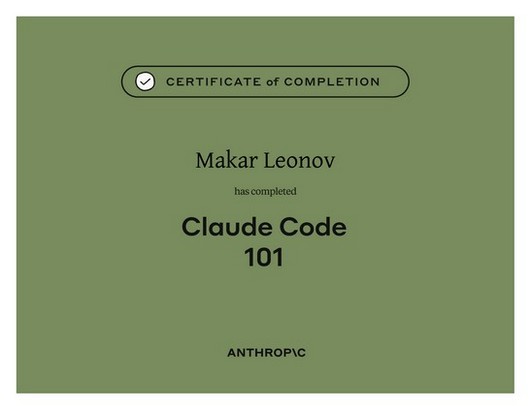
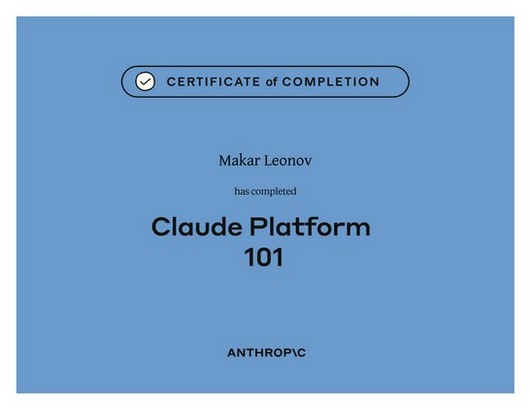
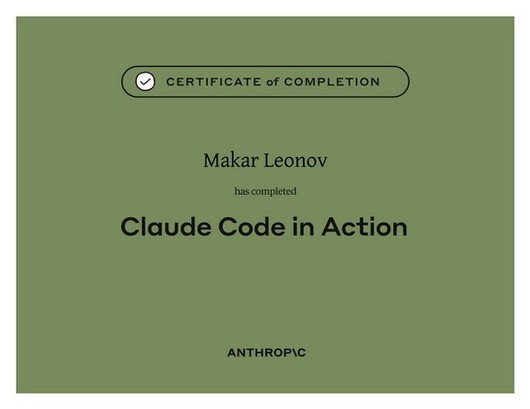
Certificates

10About
Tbilisi, Georgia

Makar Leonov

Thinking about the whole system — and the people operating it.

My full-stack path has taken me from interfaces to backend services, financial operations and external provider integrations. I see each task not as an isolated screen or endpoint, but as part of a working product.

I enjoy problems that require untangling a complex process, finding the root cause and turning it into a reliable, maintainable solution. I value clear architecture, observability and honestly measurable outcomes.

I take ownership end to end: clarify context, discuss trade-offs, implement the change and verify how it behaves in production. When needed, I help other developers understand and extend the solution.

I use AI to amplify engineering work — for research, analysis and automation. Final decisions, quality checks and accountability remain with me.

11Contact